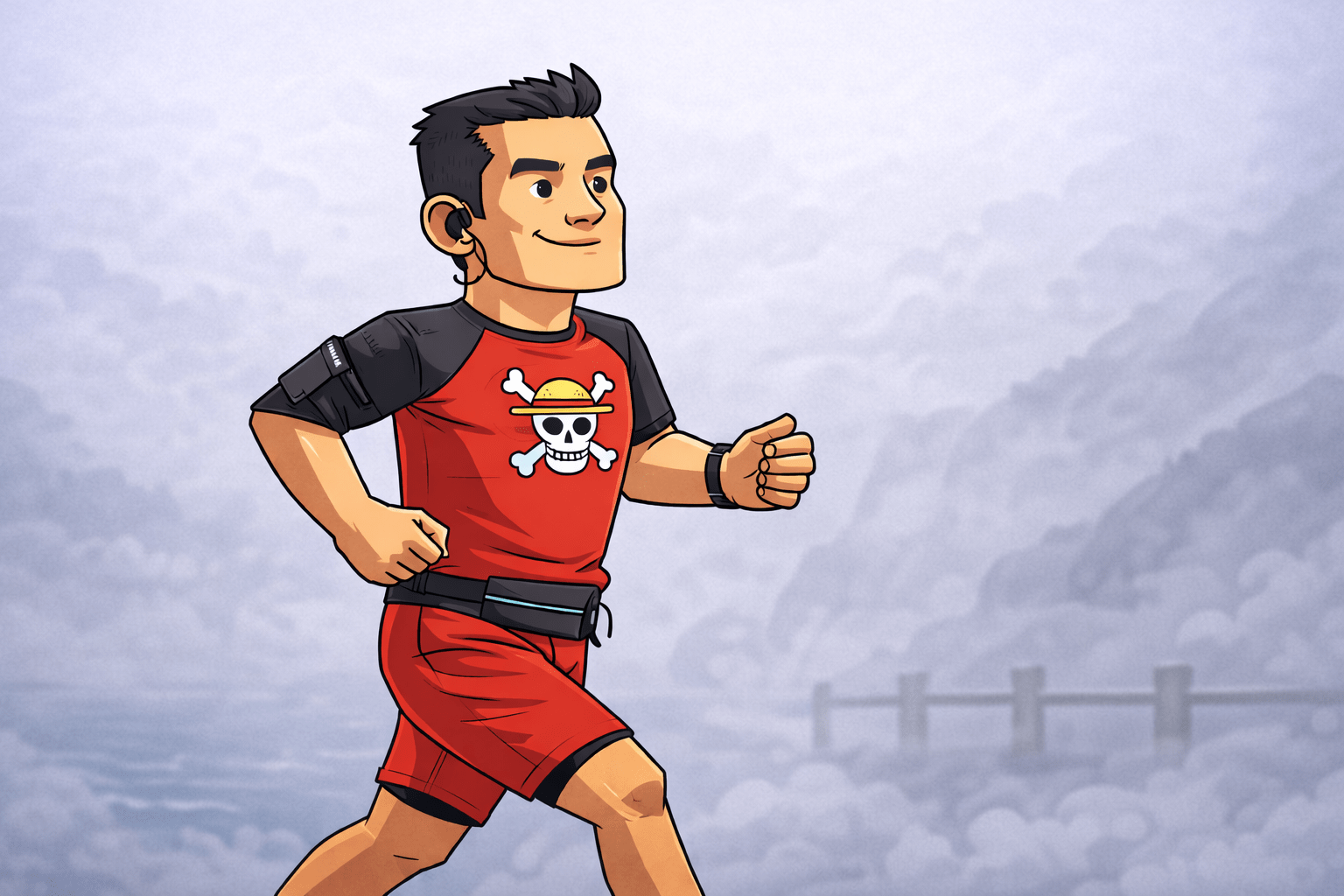
2025 Running Year In Review: Committing To Boundaries

This was a breakout year for me however, it didn’t start in 2025. It was 2024, a year where I plateaued. I didn’t stick to my boundary between work and personal life. I was still running consistently and racing often. On the outside, it looked like things were normal but for me, I knew I was struggling. My running had stalled out. I wasn’t making meaningful gains whether it was distance or speed, even though I was grinding out miles. I still enjoyed races, but I wasn’t unlocking anything for myself. I wasn’t growing how I wanted to grow.

2025 worked not because I tried harder. It worked because I made a commit to that work / life boundary.

Boundaries allow for growth

The most important change I made in 2025 was committing to this firm boundary around my personal life. This boundary is hard for a lot of folks but it is probably the most valuable commitment a person can make to doing important not urgent things. There are lots of urgent things in life that can it breakdown. For me, it was work. My career has always been demanding and it always will be; I like it that way. In 2024 though, it was difficult for me to keep my work from interfering with my running and it showed. I refused to let that happen again. Running became a daily non-negotiable for me. Every day I ran. Every week I did my weight training. No bargaining with work. No shortcuts in my training.

That commitment came with tradeoffs.

I love playing piano. I’m still working on violin. Music matters to me deeply but this year, it took a backseat. When work was intense and personal time was limited, running came first. Music came after that only if I had any time left over. That often left me wanting more. I also enjoy crafting, especially paint by numbers, but that came third. As proof, my paints dried out on me.

Falling short in my other aspirations weren’t failures. They were the inevitable result of my running commitment. Holding firm to it is what made my work / life boundary worthwhile.

Learning to run on tired legs

The most profound change in my running this year that unlocked everything else were back to back long runs. A run club friend of mine, Corey, gave me simple advice. It wasn’t about speed. It was about sustainable volume; have high mileage weeks every week and to do that I needed to accept and learn to run when you’re already tired; not fast; just getting it done; all mental.

Those runs weren’t impressive. Pace didn’t matter. It was just showing up and putting in the work on that second day. I spent most of the summer doing that. The first few times were terrible. However, I toughed it out and got myself to that next level. Speed wasn’t what I was after. It was durability. Back to back long runs made fatigue my normal, which made 60-70 mile weeks my new normal.

My body adapted naturally. I stopped dreading the second long run and instead started looking forward to it. The second long run was my day and mine alone.

When the work finally showed up

That high volume foundation changed everything.

At the Larrabee Lakes 50k, I ran a 7:01, dropping an hour and a half from the 50k I ran in 2024. That wasn’t just grit. It was high volume weeks paying dividends. I was able to keep moving on tired legs. Mentally I learned how to deal with it.

That high volume base carried over to the road with new PBs:

  • 1:28 half marathon
  • 3:35 marathon

I ended the year with 4 marathons and 2 ultras under my belt along with 5 top 3 half marathon age group finishes which is really what I was after; speed on my half. Building a high mileage base slowly with patience and consistency let me run faster and stay injury free.

Habit stacking my running

Another change I made in 2025, and I’m doubling down on in 2026, is habit stacking during my runs. 

I’ve been using a lot more of my running time to listen to audiobooks focused on personal development. They range from leadership to personal growth to learning new languages like Spanish. It’s hard and surprisingly mentally taxing. Some days my brain can’t take it and needs its own rest day. Progress is slower than I want but progress is progress; it’s working. I now partially understanding Spanish TV and have had basic conversations while traveling in Mexico which is really exciting for me. I can listen to those audiobooks while crafting too; more habit stacking.

The 2026 plan

The biggest takeaway from 2025 wasn’t mileage or PBs. Those were the results from a firm commitment to a personal boundary.

No one at work is going to get angry because you take time to take care of yourself or your family. No one will stop you from prioritizing one thing that matters to you whether that is running, music, art, education, or something else completely.

There is only one person who can actually erode that boundary and that is you.

For 2026, I got new running goals:

  • 1:25 half
    • This one feels doable to me. I can see it from 1:28. I know I can grind towards it.
  • 3:15 marathon
    • This one feels just out of reach, and that’s the point. Holding that pace for the full requires trimming almost a minute off of my pace. For that, I have already modified my training and I am being a lot more disciplined about having 2 tempo runs a week. Those are tough as hell but I’m committing to them like I committed to my boundaries in 2025. 

If you want a 2026 breakout year on something that you’ve gone flat on then you got to make a commitment to your own personal boundary:

  • Pick that one thing to protect
  • Accept that other things may take a backseat
  • Hold the line long enough for adaptation to happen – when growth and gains become your new normal
  • Celebrate that growth – it is progress for putting in the time
  • Repeat

Growth doesn’t happen on its own. It needs protection; a boundary to allow for regular commitment. It comes from choosing and focusing on one thing and refusing to be distracted from it. 

Being an Injury Free Daily Runner: My Step 1 – Building Volume

When I started to become a daily runner, it wasn’t about performance or speed. It was about creating personal space. During the pandemic, I just needed more time to think, to process. Running gave me that time I needed and because of that it ended up becoming a daily routine. Running has always been apart of my life ever since my time in the army. It was simple and grounding and gave me time away from life’s chaoses. I wasn’t training for anything specific; I was just finding peace.

Grinding the miles

In the beginning, I was logging 5 or 6 mile runs a few times a week and trained for 1-2 half marathons a year, usually completing in about two hours. Not bad, not great but enough to be in shape. When I started grinding more, it was just to have the personal space. Without realizing it though, I was building volume. 30 miles a week became 40, then 50, then 60.

Remarkably, because I was so focused on just having space for myself and not on speed or time, I gradually built a huge running base that my body adopted to naturally. I wasn’t pushing on pace; just focused on putting time on the road.

Adopting running into my lifestyle

When I ran my first marathon, I was doing between 50 and 60 miles a week. Still not worried about time, just grinding. At some point, it occurred to me that I could do a marathon instead of a half. While unintentional, this consistent grind was forming the foundation for everything that I am doing today with my running and it has kept me injury free.

By gradually having a larger volume of miles become my normal, it allowed my body to naturally adjust. Core to that was having a comfortable pace for an uncomfortable length of time that simply grew. That is how I made distance running apart of my lifestyle and identity. 

It was after my third marathon that I found speed on my halfs; I got my first 3rd place age group finish. I was surprised by it really. I never set out to be fast but finding speed caused me to change my approach. I had built up a massive weekly running volume. After that finish, it was more than just a grind.

Running injury free

Today, I am still doing 60-70 miles a week as long as I am not tampering. I’m not trying to prove anything; the miles are just part of who I am now. For me, running daily sustainable isn’t about chasing PRs. It’s about having a routine you can maintain forever. You don’t need to go far or fast. What matters is putting in the time, the daily miles on the road, and letting your body adapt little by little.

If you’re just getting started, ignore pace. Ignore races. Just show up, put in the time, rack up the miles, and let the grind do its work. Focus on running to create space for yourself and building a routine that you can commit to. Your running volume will build gradually with your body adjusting and staying injury free. Then see what happens next. I found speed and ultras; I love both. A running lifestyle is about having routines that let you be injury free.

Helping Mentees Find A Personal Vision

It’s pretty common for mentors to assume that their mentees have a vision for themselves. In fact, there are many that start off mentoring where they think that their mentees have one that is similar to their own. That assumption, however, is frequently false. It isn’t just that there are differences. Most mentees haven’t spent much time simply thinking about what’s important to them nor how they see themselves in the future. Instead, most are focused on what their peers or manager think of them. That shared vision that mentors thought they had is actually their mentees mimicking them. 

One of the reasons I use Arnold Schwarzenegger’s book “Be Useful” in book studies is that its first chapter is all about having a vision for yourself. The simplest and hardest truth is that before your mentee, frankly anyone, can have meaningful growth, they first must see the person that they want to be. That chapter, “Have a Clear Vision”, is a fantastic way to start a mentorship. It’s about creating and maintaining that personal vision. Once your mentee begins forming one, you can then start figuring out what to do about it.

Why having a vision matters

I like to start my mentorships focused first on helping create that personal vision. The focus and clarity from a mentee’s vision, even an early stage one, is the foundation for every meaningful mentor / mentee relationship. Without it, mentees are likely to not really understand mentorship advice and will instead end up paying more attention to the WHATs on recommendations as opposed to the WHYs behind them. 

Without a personal vision, mentees will unconsciously start copying their mentor’s because they don’t yet know what theirs look like. A lot of energy can be burnt up if not enough time is spent upfront finding their vision; discovering the core things that matter to them. Whether they need a lot of prodding or a little nudging, you also need to deeply understand their vision for your advice to land correctly. The lessons that shaped you made sense to you because they aligned with your vision. If your mentee tries to adopt those outright, they won’t have the same meaning. That can lead to confusion, frustration, and even rejection because of having differing visions.

The most effective mentors don’t just talk about what worked for them. Great mentors seek first to understand their mentees and what truly drives them even when they don’t know themselves. It is that understanding that allows them to focus their mentorship around those passions. It is that focus that leads to effective growth.

How much time do you spend on vision

The short answer is that it never ends. A person’s vision evolves over time. What is important is that you spend enough time where you can be completely confident that you have identified one or more things that your mentee deeply values. That is done by seeing how your mentee cares about different things both at work and at home; not by what advice you think is resonating. This process is what people sometimes think of as getting to know your mentee however it is a lot deeper than that.

Taking a shortcut here and giving advice too soon, regardless of what framework, strategy, or methodology you are following, will always get you into a situation where some of your advice won’t stick. That is because you have not shaped your mentorship around the things that matter to your mentee.

Remember, you can only be effective with people, not efficient. That is precisely why mentorship does not scale and you must spend as much time as it takes to help them form that personal vision. Some mentees you encounter will already have a strong vision for themselves, likely already established by a previous mentor or coach. They might not have all the details fleshed out but they know where they want to going. A lot, however, do not, especially new or recent grads; perhaps reflective of one of the great failings of our current academic environment which is more centered on completing assignments versus thinking intellectual. It shouldn’t be surprising that many new grads even from top universities have not actually stopped and reflected deeply on themselves to discover things that they truly care about. 

The time spent on forming a vision will be well worth it, even if it is weeks or months. By doing it at the beginning, your mentees will fully understand that your mentorship isn’t about your approval but about their growth.

Fostering their vision

While it is likely that you will find common interests with your mentees, especially in the early stages, avoid the temptation of talking about your vision and what worked for you. Instead, use those interests as well as the ones that aren’t in common to create space for reflection. Ask probing questions and test observations to deepen their thinking; it must be more than just an accounting of how your mentees like to spend their time. The passions that you are looking for are central to their identity. 

This process means you must be accepting when parts of their vision don’t resemble yours. That is ok and to be expected. Remember that your ultimate purpose as a mentor isn’t to create copies of yourself. It’s to help others build a life that is true to them.

I often use ChatGPT these days to help new mentees create a mission statement. You’ll be surprised at just how many haven’t ever made one before. ChatGPT is excellent at quickly taking a bunch of raw unorganized ideas and thoughts and putting structure around them:

  • Ask your mentee for the things that they value the most
    • 3 things at work
    • 2 things at home
    • 1 big personal goal
  • Feed that into ChatGPT as a prompt
    • State that these are the things at work and at home that are important to your mentee along with one of their big personal goals
    • End the prompt with the following
      • Create a mission statement for my mentee
  • Read it out loud to your mentee
    • Talk about what ChatGPT created
    • See what is important and meaningful
    • Encourage them to reflect and to try creating their own mission statements
  • Revisit this mission statement every few months
    • Remind them that visions are suppose to evolve as people grow
      • They are living documents

Forming and maintaining a clear vision is a critical first step in mentorship. Starting with one and coming back to it will help your mentees focus on personal growth that has a direct line to how they define themselves.

Using Audiobooks to Learn a New Language While Running

For the past two months, I’ve been learning Spanish during my training runs.

It started as an experiment to see if I could do something with the gobs of hands free time I have while running. I already run almost every day and generally it is for more than an hour. I basically spend what amounts to a part time job on the road grinding miles. Like a normal person, I enjoy listening to music and audiobooks. However, I have always wanted to learn to speak different languages. So I made time for it here.

I have started with Spanish and chatGPT recommended the audiobook “Paul Noble’s Learn Spanish for Beginners Complete Course”. While swapping my music for it was simple enough, I wasn’t prepared for how mentally demanding it would be. Unlike music or novels that let my mind drift and relax, learning a new language requires a lot more attention. On my first few runs, I definitely felt hugely distracted; I almost side wiped a mailbox once. I got used to it but then found that I could only effectively listen for about 40 minutes. Then I would hit my mental limit and need to switch back to music. Also every third or fourth day, I would need to take a Spanish rest day to give my brain a break.

With that routine, I feel I’ve made some real progress. Repetition is essential; I often have to re-listen to chapters to make sure I absorbed the material. I’m nearly through this audiobook and I plan to start Paul’s second right after it. I’ve also been able to work my way up to listening for entire runs now. I still need my mental rest days though.

Why Spanish matters to me

This isn’t just about checking off a goal. I’ve always wanted to become conversational in several languages because I like to travel to countries where English isn’t the first language. I love travel but I also want to be respectful of the people who live in the places I visit. I want to connect to these places and I have always felt that language was core to that.

What I like most about having language as apart of my running is that I’ve reclaimed time. For a while, I have known that I was taking giant mental breaks during my runs. I was honestly loving that about my long runs. I looked forward to zoning out to a novel or music while grinding miles. I still enjoy those things and there is real value in having those mental breaks. However, I also knew that time was prime to be used for something that better aligned with my personal vision. It was a sacrifice and tough but now I’m using it for something that matters to me.

What comes next

My first big milestone will be watching shows and movies in Spanish while I’m grinding on the treadmill this winter or crafting in the evenings. If I can follow along, even loosely, I’ll know it is working.

After that I’ll look for someone to practice with online. I already know that my pronunciation needs some serious work; I’ve tried some of my Spanish out on one of my friends and she bursted out laughing but hey, it’s a start. I’m not waiting until everything is perfect. I’m just committing to a new process, a new grind, and making space for something that aligns with my vision.

Turn mental drift into growth

If you want to build something new into your life, like learning a language, you need to make time for it. The best way to do that is by finding the time you’re just giving away. Here’s generally what I do:

Step 1: Identify activities where your mind zones out

So for me that was running. When I started grinding miles, I would just zone out to music or an audiobook. I also did that while doing chores, yard work, or driving. These were spaces that I was using to give myself mental breaks and that’s not wrong. However, that is the time that is up for grabs.

Step 2: Choose something to learn that aligns with your vision

That is key. It can’t just be something that sounds cool or interesting. It must be part of how you see your future self, your personal vision. For me, it is being able to connect more deeply with people when I travel and that means speaking in their language. By working towards your personally vision, it’s easier to stay committed and be okay with sacrificing things that don’t align.

Step 3: Commit and be patient

You’re retraining your brain. That doesn’t happen overnight. You’ll get distracted. Trust me that my shoulder demon was screaming at me and I wanted to default back to zoning out to music. That’s normal however you got to push through it and keep going. Show up for yourself multiple times a week. It is okay if a chapter does not stick, just listen to it again. Repeat it until it finally sticks and then move on. Results are not immediate but if you stay with it, you will see them.

Growth doesn’t always have to come from big changes. It can come from the time where you already are doing something productive but are also mentally drifting. You just have to choose to use it differently and grind on top of the grind.

Good Mentorship Starts with Good Mentor / Mentee Fit

At work, people are often asked to mentor someone with the bests of intentions but with very little practical direction. That commonly plays out with a manager saying “This person has lots of potential. Can you do some mentoring to get them to the next level?”. That feels reasonable and if you have been in that situation you probably agreed to help but suddenly you’ve got a weekly 1:1 on your calendar with no agenda or even clarity about goals for your new would-be mentee. Worse is that the fundamental question hasn’t been answered; are you and your new mentee actually a good fit?

These setups are almost always a lose / lose. Fit is the most important part of any successful mentorship yet it is the least talked about. It’s rarely part of the conversation. Too often mentorship is treated like a blanket management solution. Someone isn’t performing well? Assign them a mentor. Someone wants to be promoted? Assign them a mentor. How often has that really worked out for folks?

Mentorship isn’t some sort of knowledge transfer or process for leveling up. It’s a relationship built on shared values, mutual respect, and trust. Without that even the best advice won’t land. All too often it leads to a bunch of shallow conversations and both people wondering why nothing clicks.

Mentorship without fit is a waste of time

Mentoring someone who isn’t a good fit doesn’t just fall flat. It is draining for both. That comes from a lack of real connection. It’s a bad relationship being forced to happen. You can’t force good fit either. Mentorship only works when both people have that real connection on values, mindset, and how they approach growth.

Unfortunately, remote work encourages these bad setups. Folks wanting to mentor frequently jump straight into goals and check-ins without spending nearly enough time at the start to see if they have anything in common with their mentees. Most mentees won’t say anything; they’re trying to be professional because they are at work. That means it is on the mentor to slow down. They have to see if that connection is possible and then establish it. That means spending more time upfront and looking for that common ground that goes beyond the workplace. There isn’t a virtual coffee room or water cooler in the remote environment so that often means spending even more time.

What fit actually looks like

Fit isn’t about personalities, interests, or similar job titles. It’s not “yay! we’re both engineers” or “ya! we work in the same org.” It’s deeper than that. It is about shared personal values and trust. While the mentor and mentee will be at different points of their respective growth journeys, they are in effect on the same one; they fundamentally believe in the same core principles.

The best mentorships I’ve had weren’t built around projects, work, or domain expertise. They were built on how we approach personal growth and by extension life. I look for people who believe in the same things I do; my love of challenging myself; finding my limits; and pushing beyond them while at the same time giving back to the people and communities that gave me those opportunities. My belief system ties directly to what I appreciate in a job as well as in my running. When I find a mentee that appreciates the grind just like me while also trying to make the world just a little bit better, we connect almost immediately. We don’t waste time talking about work goals. We talk about doing hard things; finding our limits; and eventually pushing past them.

That kind of fit, fortunately, is pretty common. Friendships and communities are formed around shared values and principles. So finding good mentor / mentee fit is definitely possible but you still can’t just assume it will be there. That’s why I don’t say yes to every mentorship request. I look for that connection and if it isn’t there, I say no. Not because I don’t care but because I do.

Knowing when and how to say no

Saying no or not right now isn’t a rejection. It’s a decision to protect your energy, respect theirs, and create space for mentorships that truly work.

Saying no to mentorship is hard especially when you care about helping people. Sometimes, though, it’s the right thing to do.

The easy no is when the mentee makes the choice for you. If they are missing your meetings; showing up unprepared; or keeping things surface level that indicates that they’re not a good fit. They are looking for something different in their mentors. In this situation, they quietly opt out.

The hard no is when the mentee is showing up, trying to engage, but regrettably the connection just isn’t there. The conversations revolve around topics that don’t resonate or engage both of you. Those are the one sided chats where you find yourself doing all the talking or struggling to understand and relate when listening. Neither of you are at fault here. There just isn’t a fit.

It is tricky when there isn’t fit with a mentee that is trying. You definitely want to identify it early though as to not let things drag out. That will take an awkward situation and make it worse; it is why you must always look for fit first. When you have to say no, I have learned that it is best to be honest and kind. I explain that mentorship is entirely optional; it’s not tied to their performance reviews; and nothing about it is going to hold them back professionally. Then I talk about what mentorship really is: a two way relationship rooted in shared values and the ones that work best have a real personal connection. I also commit to helping them find a mentor where they get that. That’s right. When someone is trying to grow, for me it isn’t over until I know they got a mentor that works for them.

Fit is about building trust on day one

You can only be effective with people, not efficient.

Being intentional about mentorship fit doesn’t make you exclusive or elitist. It makes you respectful of the mentee’s time, energy, and frankly trust they are looking to place in someone in order to have hard conversations with them.

When you start with fit, mentorship grows into something more than just sagely advice. You move from structured check-ins to shared challenges. You stop playing teacher and become trusted partners on hard things at work. You have hard conversations which end up having nothing to do with work. You don’t track progress. You end up both focusing on growth; the real hard work.

If you are mentoring someone today where you know there is poor fit, do the right thing and respectfully end it. Then help them find a mentor that works for them. In those situations, it is the best way to help.

Grit, Chips, and M&Ms: How Ultras Became My Personal Growth Plan

I didn’t expect one ultra marathon to have such a big impact on my life. When I signed up to do my first last year, I had several marathons under my belt and was at the point that I felt I could comfortably keep going after completing one. I saw there was literally one that was local to me so I hit the old f-it button to prove to myself that I could do it. I wasn’t planning on dramatically changing my running or mindset. Here I am though. One ultra in the books and I’m completely bought in.

I’ve always loved running. Getting out there everyday and racking miles before work. Half marathons are still my fav. I am hooked. I love the speed and seeing how I rank after each one. I put my time in at the gym and hot yoga studio. Both have been huge for my speed and injury prevention. Marathons have become my excuse to travel and see different parts of the world. I end up hitting a bunch of historic sites while hunting for fridge magnets that speak to me.  

Ultras are a different kind of animal. I know I have only completed one but I’ve done the runner thing and signed up for two more this year. So I’ve been doing the training, the work. For me, ultras are truly about a daily commitment to bonkers miles no matter what and that has translated for me into personal growth.

Personal growth needs a plan (and a lot of snacks)

If you want to really grow, you need a goal. A vision for yourself that matters a lot to you. It needs to be a part of how you define yourself. Then you can easily justify any amount of time you spend working towards it. That’s you investing in you. For me, ultras have become the most honest way to practice investing in myself. Part of my vision for me is endurance. It isn’t about the distance but instead the time spent grinding through miles and challenging trails. It demands and develops consistency, grit, to put in the work to do an ultra.

Side perk, ultras have amazing aid station snacks.

I’ve never been a big junk food guy. Don’t get me wrong, I like a potato chip just as much as anyone else but I just don’t include them as an everyday indulgence. Now enter the trail race. I’ve done both an ultra and a marathon on trails. Unlike regular road races, they have way better snacks. I love getting a handful of potato chips and M&Ms so much. It is something I genuinely look forward to. It’s more than just fuel; it’s part of the celebration of being out in the woods doing the grind that I earned with my training; all the time I put in to do that race and the commitment I made to personal growth to make that moment mine. I honestly don’t look at M&Ms the same way now. 

The simplicity of the ultra commitment

One of the things I love about endurance running is how simple and unending the goal is: be a better runner. That’s it. When it comes to creating a vision, that simplicity and unendingness are absolutes. A vision isn’t signing up for one race. It is the lifestyle that surrounds it. The training, the nutrient, the sleep, and even the recovery are all part of it but so is what you exclude; for me that ended up being tv and video games. Your vision is how you define your lifestyle and that is something that you have to believe in because sometimes everyone around you thinks you’re crazy. 

Simple unending justified insanity.

That isn’t to say that races aren’t meaningful to me. I love race day. They are a great way for me to motivate my training. They are important milestones. When I sign up for one, I am not just blocking off that Saturday or Sunday. I am setting up a roadmap for training and committing to that work. That’s the part I value the most. The work.

Signing up for an ultra means I’m committing to doing something for myself every single day. It’s not glamorous or dramatic minus tamper week where every runner is a drama queen. It’s lacing up and getting it done. There’s power in simplicity. You know that you are making a personal investment in you.

My commitment: Leaning into double long runs

The biggest change in my training wasn’t physical. It was mental. One of my friends told me plainly that to train for ultras you have to get used to running on tired legs. To do that, you got to do back to back long runs, a.k.a. double longs. At the time, the idea of doing those was a pretty big blocker for me. I knew before talking to him that I had to do them but was coming up with all sorts of excuses to not. They ranged from working a lot to fearing injury. I don’t quite know what it was that my friend said that stuck with me but it just clicked. If I wanted to take ultras seriously, I had to become comfortable running on tired legs. Period.

Something about just accepting that plain fact allowed me to commit to doing back to back long runs. It just cut through all the lame excuses I was using. Once I accepted that, it was just about showing up and making it something I really looked forward to instead. Remarkably it was listening to audio books that did it. My short runs are all about music. Long ones are where I listen to books written by people I admire or have been burning a hole in my wishlist. That let me see my second long run as another opportunity to have time to listen to those books. 

As I happily trotted through my books, I stopped minding that my legs were tired and started seeing my double long runs as my time every week. Not just for my books or even the miles. It became my new way of training my grit. That allowed me to push through my tired legs and gain more weekly miles. Doing that grind has allowed me to see myself more clearly than I have ever before. I’m not just a nutter that is constantly running. I’m an endurance athlete. Everyday I get out there; I am doing the work and proud of it.

This clarity of vision for myself has changed how I relate to running and hiking. No longer is it just grinding miles or pounding trails. I regularly volunteer at local races and trail maintenance events; I donate to trail and running organizations. These trails, races, and people supporting them have helped me find the space to grow, to learn, and to become more than what I was before. It isn’t just where I like to run anymore. It’s a community that I want to be apart of as much as possible. It’s something else that snapped into focus for me.

Going after the hard thing

If ultras have taught me anything, it’s that personal growth doesn’t happen by chance. It only comes from committing to something; following up on that something; and following through on that something day after day. 

Everyone can commit to doing a hard thing. If you don’t have a hard thing or if it is still fuzzy, this is what you need to do:

Choose a goal that has a direct line to something that is very important to you

You might not have a clear vision for who you want to be. I certainly didn’t. I did know however what was important and that meant I would be willing to commit to doing the work and putting in the time. 

Remember that good goals are simple and unending.

Make a plan that demands daily effort

It has to be daily. There is no part time when it comes to doing a hard thing that is important to you. We all have jobs and family but don’t let them be excuses for not doing your hard thing.

If your excuses stop you, that means your goal isn’t actually important to you. If that happens, pick a different one immediately. One that is deeply connected to you.

Follow through every single day

Show up no matter what. Even when it’s inconvenient, uncomfortable, or boring. 

Showing up is the hard work. It is always going to be that way because showing up is how you train your grit.


It doesn’t have to be running or even fitness related. That’s important to me so that works for me. There are other things that are important to me that I make time for too like playing piano. What you choose has to matter enough to you that you’re willing to do the work everyday. Not for a prize or applause but because it’s you working on you.

When you hit a milestone on that hard thing, look back at how you showed up again and again to make it there. Celebrate it. Make it your moment. I collect my race medals and stick them to a wall in my living room. I also look forward to hitting those trail race aid stations that have my favorite snacks because… I really do love those potato chips and M&Ms on race day. It’s a salty and sweet moment I made for me.

Using A Weekly Book Study To Help Remote Mentorship

In an early blog post, I talked about how mentorship has suffered in the remote setting. Our opportunities to have ad hoc mentoring moments has been dramatically reduced; Zoom doesn’t let them happen. So as mentors, we have to put more time into intentional ones. One activity that I recently have had success with is a weekly book study. I based it loosely on one that I had with a previous mentor a ways back.

I used these weekly sessions to create space for people I mentor to deeply reflect and grow. I kept the group small, limiting it to three, and only those who were committed to achievement, not chasing titles.

Each week, we listened to a chapter from a leadership audiobook I selected. We met over Zoom for a discussion that I lead. I asked probing questions on the current chapter and pushed for thoughtful reflection on the previous in order to make connections to earlier insights. I made sure everyone spoke and everyone grew.

This wasn’t a book club. It was a practice in personal growth.

Choosing the right people: Achievement, Integrity, and Intent

The success of these sessions didn’t come from the books. Those were the seeds. It came from the people in the (virtual) room.

From the beginning, I was purposeful about the size of the group and who I invited. Keeping it to three made the space intimate and focused. More importantly though was the mindset of the people. I didn’t choose folks chasing a promotion or visibility. I chose those committed to achievement; the kind that shows up in how they work. Those are individuals with integrity and consistently do the right thing even when no one is looking.

That upfront commitment to principle matters as these are the folks that will listen to the chapter at least twice during the week without being told to. They will show up prepared for a discussion and ready to absorb hard lessons. They will also continue to reflect on the session until the next one. They aren’t seeking validation. They’re seeking growth.

This commitment was core to the success of the book study and made the sessions honest, challenging, and deeply rewarding from the start.

Selecting the first book: a reset for personal growth

The first book you choose sets the tone for the study group. It isn’t about picking the hottest leadership title or something tied to performance metrics. It’s about choosing one that hits the reset button on how people think about personal growth. Most aren’t deliberate about how they manage their growth. They don’t carve out space for it. As well, most companies don’t help them prioritize it. So it is critical that your first book does that for them.

It needs to be accessible, engaging, and aligned with your philosophy on personal growth and leadership. It needs to be both educational and entertaining which means it has to be something written in plain language; delivered with authenticity; and infused with relatable stories. Corporate jargon and abstract theory will lose your group. For that reason, the starter book I picked was “Be Useful” by Arnold Schwarzenegger. 

It’s funny. It’s current. It’s narrated in Arnold’s unmistakable voice, which makes it more human than any business text. More importantly, it speaks directly to values that matter: discipline, contribution, service, and resilience. These are qualities at the core of personal growth.

“Be Useful” doesn’t have much to say about team OKRs or sprint planning. That’s exactly the point. It’s not about current projects your mentees are working on. It’s about them and helping them discover who they are; helping them understand how they think; and helping them become the person they want to be.

Don’t mistake that first book for an icebreaker. It’s the commitment you’re making to them.

This space is for you. This space is for your growth. I’m here to help you grow.

Structuring weekly sessions: Consistency, Reflection, and Respect

It is important that the sessions are focused, intentional, and deeply personal. I kept the format simple but consistent to ensure that each one hit the mark. It is that routine that helps promote active listening and reflecting as a group. It avoids the sessions from becoming a task; instead they become a best practice.

Here’s how I ran them:

  • One chapter per week
    The pace matters. One chapter is enough to spark ideas without overwhelming folks with multiple concepts. It keeps the discussion focused by giving each week a clear theme.
  • 30 minutes on the calendar, 45 minutes in practice
    We scheduled it for 30 minutes on Fridays. That mades it easy to say yes to and no one complained when we ran long. That’s because the conversations were meaningful, not performative. I biased for ending on insight than on time.
  • Mentor led, not dominated
    I lead the discussion but made sure to not lecture. I came prepared with a few open questions designed to push everyone to think deeply and to connect themes from past chapters. I also watched for opportunities to slow things down in order to ask how they would have done things differently on a project at work or even a challenge at home.
  • Everyone speaks, every time
    No flies on the wall. Participation was a requirement. To make sure that happened, for the first several weeks, I had everyone first write down their answers in Microsoft Loop before sharing and talking about them. That developed critical muscle memory and set the expectation that everyone has to be involved. Reflection doesn’t count unless you do it out loud.
  • No PowerPoint. No tasks. No performance
    No one ever had coffee with a friend and a PowerPoint presentation broke out. That’s not how trust works. That’s not how mentoring works. These sessions were personal, conversational, and human.
  • Not everything has to be about work
    I made it clear that it was completely okay if questions, challenges, or reflections had nothing to do with work. Mentorship is personal and the things that shape us the most are often are not found at our jobs let alone in JIRA tickets. Personal growth begins in the moments that matter to us as people.

Building momentum

After a few weeks, things started to shift. People started connecting dots. They remembered what others said in previous weeks. They built on each other’s insights. They started looking for opportunities to apply those insights and not just at work but in their lives. They started bring their own real and raw examples and asked better, braver questions.

That’s when I knew the first book had done its job.

The group was no longer just showing up. They were engaged. They were internalizing on the material outside of the session and thinking about how those ideas fit not only into their jobs but into their relationships and habits, their lives. At that point, I knew I had primed their minds for being intentional about growth.

They were now ready for the second book. A much deeper one that pushed them harder and challenged them more on change and growth. These are the books that have material that are hard to digest and put into practice unless they have had a solid first one that opened their minds. The second book I picked was “The 7 Habits of Highly Effective People” by Stephen Covey.

Start your own book study

If you’ve read this far, you are probably thinking about what a book study would look like at your work. It’s pretty likely that you already know a couple people who have the right mindset. They’re not chasing promotions. They’re not trying to impress. They’re just quietly committed to getting better. That’s who you work with.

Don’t wait for your company to launch a mentorship program. Don’t ask for permission. Just start. Pick your favorite book and schedule some time each week. 

Buy the audiobooks for your group with your own money

It’s not that much and it will speak volumes about the sincerity of your offer. You’re not making a suggestion or tossing it over the wall. You’re making a clear commitment to them. You’re saying “I believe in you, and I’m willing to invest in your growth.”

That’s how real mentorship works. Through service, not status. So start now. Create the space. Guide the conversation. Challenge their thinking. A few weeks from now, when the momentum builds and you hear someone say “This is the best day of the week”, you’ll know you made a real difference.

Exercising Your Grit: A Lifestyle of Personal Achievement

I am an active marathoner though I only came to it in my mid 40ies. I was motivated initially to get faster at my halves and it has definitely done that. In following a regiment of weekly long runs with daily short ones, I finally broke four hours at the Bend, Oregon marathon this year. However, it has become more than just about the speed for me. It’s about the grind now; something I’ve always been drawn to.

Marathons, unsurprisingly, are hard and require intentional effort and training. I expected that. I was surprised though how naturally it fit into my lifestyle. For all my life, I’ve always worked hard. I identified with working hard. Marathoning gave me perspective that I had not gotten from my career. I realized that I seek achievement on things that are personal to me. I was getting some of that out of my career but it became obvious with marathoning. It challenged me to commit to something that nobody else was asking me to do but me. I found that the pursuit of a personal achievement was me exercising my grit.

To exercise grit is to live a life of personal achievement

Working hard towards a personal goal often gets misunderstood. People on the outside generally see the goal but not all the hard work. So it often gets labeled as ambition or career mindedness. I think there’s a better way to describe it: achievement focused. The personal goal drives and focuses all the hard work, your grit, and the achievements are measures of progress. You have to train your grit just like you would train any muscle. Years of hard and uncomfortable work; measuring incremental progress with achievements; and making tweaks and adjustments to how you work hard and strive for those achievements aimed at that personal goal.

What makes grit powerful is that it’s tied to purpose, a goal that is personal to you. It’s not just endurance or toughness that comes with learning how to work hard. It’s committing to a challenge that deeply matters to you. A challenge that you are willing to get yourself beaten up over and over again just to gain an inch on that mile long journey. That isn’t limited to titles or status. Personal achievements are all the small incremental victories and successes, the inches.

For me, endurance running is one of my passions. Each race completed, every medal, and yes those age group podiums I now occasionally get in local halves are my personal achievements in the journey of getting better at endurance running. I haven’t fully unpacked why that matters so much to me but I know it is a great example of me exercising my grit. 

Personal growth is strengthen your grit

True personal growth does not come from checking a box and it certainly does not come from a title or status. It comes from learning how to grind through the hard work in pursuit of a personal goal. Learning how to not give up and to keep trying and striving no matter how much pain you go through to get that inch. Learning how to grind it out with your eye on the prize while keeping a smile and positive attitude is what builds true character.

That personal goal doesn’t have to be running. That’s just what I am passionate about. For someone else, it might be playing an instrument, creative writing, or cooking. What matters is that the effort is personal to you on a deep level. It is your passion that will drive you to do the hard work, and more hard work, and to keep on working hard because a real personal goal is unending. Remember that true hard work is intentional and uncomfortable; it’s focused on doing something that is hard for you; it isn’t just going through the motions.

True personal goals don’t have defined end states; achievements do. That is why achievements are measures of progress towards a goal. That means you will never be finished. That’s the point. With running, it isn’t about completing a race; it is about doing it better next time whether it is faster or longer. In cooking, it isn’t about following a recipe; it is about perfecting it whether it is through adding personal touches or improving techniques. Creative writing isn’t about finishing one story; it is about becoming a better storyteller.

It is the hard work in the pursuit of that goal that matters because you chose to do it. Progress demands more from you each time. Progress asks you to show up even when it’s hard; especially when it’s hard. Grit is how we meet those hard moments; moments that define us. Achievement is how we know we’ve made progress.

It’s never too late to start exercising your grit

I started marathoning in my 40ies. It wasn’t some radical departure from who I was as I already loved running. I did, however, make a much deeper commitment to it. I became intentional about it. I leaned into the hard work. Everyone has a thing that they love but not everyone has grit. Maybe you’ve been circling something for years, waiting for the right time or signal to begin. Stop waiting and just commit. 

If you have something you love doing, regardless of what anyone else thinks, take it to the next level. No shortcuts. No judgment. Just commitment and start doing the hard work, the grind. The sooner you commit, the sooner you start exercising your grit, the sooner you start realizing true personal growth.

Where did all the mentors go: Why workplace mentorship is disappearing and it isn’t just because of Zoom

The pandemic forced remote work and Zoom meetings on us. It has changed how we work with people. It’s faster. It’s more efficient. It’s also way more transactional. Gone are random hallway chats, coffee breaks that turn into career conversations, and the subtle cues we just picked up on by being around each other. It is a bit lazy for anyone to point at Zoom for the decline in mentorship; it is only part of the story.

The reality is that mentorship was fragile before the pandemic. It always has been because real mentorship is hard for companies and managers to “develop” or “invest in”. It isn’t their fault though. Mentoring is focused on personal growth and development of people; not the delivery of a good or service. It isn’t surprising that most companies barely reward or recognize mentors let alone have figured out how to make it work across distances. Remote work didn’t destroy mentorship; it just revealed how little corporate infrastructure there is to support it.

Remote workers were never full members of the tribe

Prior to the pandemic, remote employees were often kept at arm’s length from office culture. They dialed in; participated in meetings; got their work done; but weren’t part of casual conversations, last minute brainstorms, or spontaneous mentoring moments that happen by being in the office. They weren’t in the room when the real relationships were being built and that was an accepted norm.

Many of us are remote at least part of the time now so the entire workplace has taken on a more distant feeling. There are fewer chances to connect informally; fewer opportunities for junior employees to ask offhand questions; and fewer moments for senior employees to notice someone that is starting to stand out. The office environment that naturally allowed for mentorship never really materialized over Zoom.

Mentorship is not management: It shouldn’t be measured

A big misconception about mentorship is that it’s just another management activity. 

It’s NOT.

Mentorship is a voluntary, relational act. It’s rooted in trust, curiosity, and a willingness to be vulnerable on both sides. A good mentor doesn’t just spout advice. They make space for someone to grow, stumble, and ask questions that they don’t feel safe asking. Mentors create and lead the tribe.

Mentorship is very personal and the fit between mentor and mentee goes both ways. So it can’t be assigned or measured. The moment it gets included in a performance review or tied to a metric, it will turn into a checkbox where people will go through the motions to have it marked as done. That’s not mentorship. That’s a lose / lose.

Why do some people mentor and others don’t

Whether or not someone mentors is personal. You can’t force someone to mentor or fault them if they don’t. That is like choosing who your kid’s friends are. For those that do mentor, there are a range of reasons.

Some mentor because someone did it for them. Others because they genuinely care about helping people grow. Maybe they see someone that reminds them of a younger version of themselves.

Mentorship takes time, emotional labor, and a degree of cultural fluency. There are many people that want to mentor but don’t because it is challenging and Zoom has made it even harder. Not only is it more difficult to mentor but also to get advice and guidance on how to be effective at it; the mentorship of the mentor. Without guidance, support, or community, even the most well meaning potential mentors get frustrated and give up.

Without mentors, junior employees drift. They feel isolated, unsupported, and unsure how to navigate a workplace where so much happens off camera.

We don’t know how to build tribes online

The decline of mentorship is not a scheduling issue. It’s a cultural one. In physical offices, mentors play a huge role in building the tribe. They are the ones who tell the backstories, explain the unspoken and off book rules, and make others feel like they belong. In a remote first world, that tribe is harder to build because in truth we’ve never invested in building it.

Slack channels, Zoom meetings, and digital dashboards are great for getting things done but they do nothing for relationships. What’s missing is the social component: the shared jokes, the casual check ins, the mutual recognition that we’re in this together. Without that, mentors don’t have a way to add new tribe members.

Tribal culture

Those of us that want to mentor don’t need more formal mentorship programs. We just need to do things differently. That is going to involve spending a bunch of personal time experimenting, failing, and eventually figuring out things that work for you and your mentees.

  • Virtual break rooms and hallways: Create digital spaces that aren’t about work or projects and are limited to only 2 or 3 people. Small is good because when is the last time you had a deep coffee chat with a party of 8.
  • Be a proactive mentor: More than ever it is on you to seek and create mentoring opportunities. You can’t rely on bumping into people in the break room over coffee or lunch. You have to make these moments happen and trust that people will appreciate them.
  • Allow the tribe to form: Stop trying to systematize mentorship. It can’t be forced. Let it happen naturally. Focus on the relationships and the people.

Mentorship thrives when people feel safe, seen, and supported. That is possible online but it takes intention; it takes commitment; and it takes the humility to admit that we’ve been waiting too long to make it happen.

Final thoughts

Mentorship has always been more than career advice. It’s about belonging to the tribe. It’s about someone saying, “You’re not alone. You matter here.” In a remote first world, that kind of connection is more difficult than ever to make. It’s not impossible though.

We, the mentors, have to stop waiting for it to happen on its own. We have to stop pretending that Zoom is the problem. The real solution rests on our shoulders.